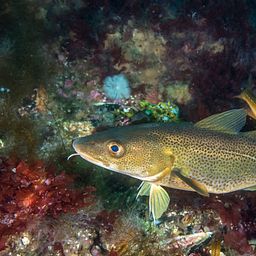
Gastrointestinal effects of crustacean shell by-products in diets for farmed Atlantic cod (Gadus morhua)
Comparative Biochemistry and Physiology A ()
Forskningsartikkel
Åpen tilgang (hybrid)

 under lisensen CC BY
Kilder:Crossref, OpenAlex, Nasjonalt vitenarkiv
Forfattere (8)
- Martina Quagliardi
- Trond M. Kortner
- André Sture Bogevik
- Elvis Mashingaidze Chikwati
- Kathrine Ryvold Bakkemo
- Elin Christine Valen
- Ellen Elisabeth K. Hage
- Guro Løkka
Abstract
By-products from crustaceans destined for human consumption are often discarded but may serve as sustainable aqua-feed ingredients. This study assessed short-term physiological responses in Atlantic cod (Gadus morhua) when 15 % sunflower meal in commercial diets was replaced with 15 % brown crab (Cancer pagurus) or 10 % shrimp (Pandalus borealis) shell meals. In a 27-day trial, cod (∼300 g) in triplicate 500 l tanks (n = 29–36) were fed isoenergetic diets. Growth, feed intake, distal intestinal (DI) dry matter, amino acid digestibility, and mineral content were measured, alongside gastrointestinal macro- and microanatomy, digestive enzymes, bile salts, and gut gene expression. Diet had no significant effect on feed intake or growth. Crab shell meal (CSM) increased DI calcium (13 % vs. 3 %), dry matter (24 % vs. 15–19 %), and amino acid digestibility (91 % vs. 89 %), while reducing dry matter digestibility (57 % vs. 66–68 %) and trypsin activity. In the pyloric caeca (PC), CSM-fed fish had the highest bile salt level and maltase capacity. Sunflower meal increased DI lamina propria cellularity, DI iron and copper, while shrimp shell meal increased DI phosphorus (2.4 % vs. 1.3 %). Bile salts, trypsin, maltase, and LAP activity peaked in the PC and decreased distally. Relative intestinal length correlated with fish weight (r = 0.53, P < 0.001). Pancreatic digestive enzyme genes and osmoregulatory genes (atp1a1, aqp8) peaked in PC, whereas slc26a6 expression was negligible throughout. Crustacean shell meals are promising as sustainable feed ingredients for Atlantic cod, and the study offers novel insights into gut structure and function with implications for intestinal health in farmed cod.