PolarFront
- Prosjektperiode
- November 2021 – Desember 2024
PolarFront is an open science project, designed to collect reference data on distribution, productivity, and food-web dynamics in the European polar front area, in the period 2021–2024.
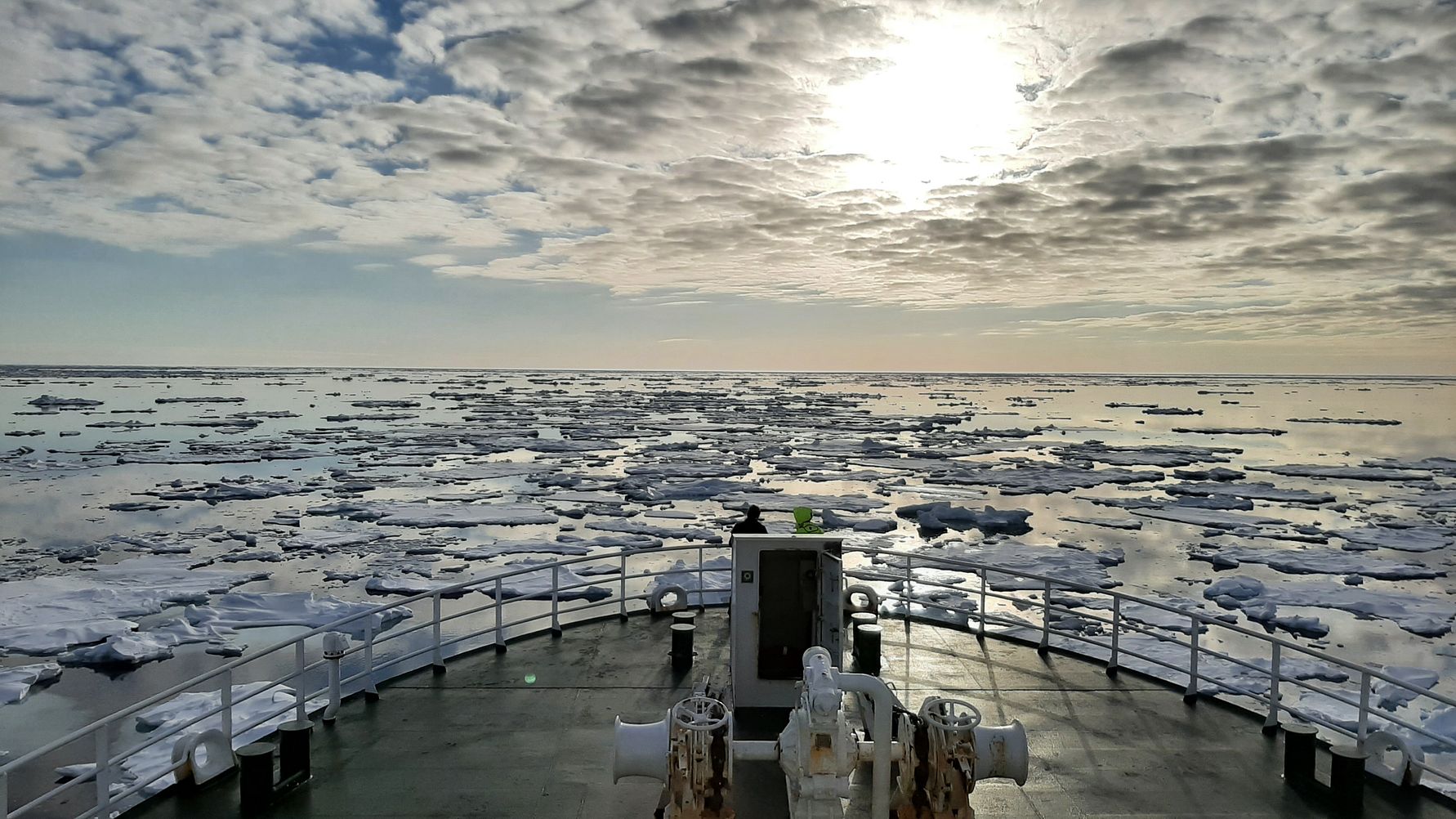
The Barents Sea polar front, which often matches the southern extent of the seasonal ice zone, is known to be of particular importance for primary production, spawning, and feeding by various components of the pelagic ecosystem.
Using shipboard sampling and Akvaplan-niva's fleet of autonomous sampling platforms, the project will investigate this ecosystem during three seasons, including the poorly known Polar Night.
Open science
PolarFront is based on open science principles, with a commitment to publish all research articles and datasets as open access.
Data is managed in accordance with FAIR principles and W3C's best practices for publishing data on the web.
Industry and management end-user groups are integrated into the project to assure that scientific results have solid impact.
All of the project's datasets, presentations and publications are published continuously on Zenodo.
Funding
The project receives public funding from the Research Council of Norway, grant 326635 and has also received contributions from two partner petroleum companies, and logistical support from UiT The Arctic University of Norway and the EU project BioGlider.
Partners
- Akvaplan-niva (project leader)
- ConocoPhillips
- Equinor
- Institute of Oceanology – Polish Academy of Science
- Memorial University
- Norwegian Polar Institute
- Scottish Association for Marine Science
- UiT – The Arctic University of Norway
